- June 15, 2026
- 3:51 pm
- 10 min read
Included in this article
Running a plumbing business means you’re constantly juggling service calls, emergency repairs, and managing your plumbers. But here’s the reality: even the most skilled plumber can watch their business crumble without proper financial management. Bookkeeping that’s months behind or full of errors is one of the most common issues challenging plumbing businesses, making it nearly impossible to track which services or clients actually turn a profit.
Why is Good Accounting Essential for a Plumbing Business?
Plumbing accounting is the financial foundation that tells you whether your business is thriving or barely making profits. It isn’t just about recording numbers in a spreadsheet. Without accurate financial records, you’re flying blind when it comes to pricing plumbing jobs, paying taxes, or planning for business growth.
Accounting for a plumbing business means tracking your income, expenses, and overall profitability specifically tied to your plumbing services. The numbers are able to give you a real picture of your business’s health, but also reveal patterns in your plumbing business that you might otherwise miss. Which types of jobs are most profitable? Are you spending too much on materials or tools? Is that new plumber actually generating enough revenue to justify their salary?
These questions only get answered when you have solid bookkeeping for plumbers in place. Good accounting helps you make informed decisions about pricing, hiring, and expanding your plumbing services. It also helps with tax reporting accuracy.
Three Approaches to Managing Your Plumbing Business Finances
You’ve got options when it comes to handling your accounting. Each approach has trade-offs worth considering based on your business size and complexity.
Manual Accounting and DIY Bookkeeping for Plumbers
Some plumbing contractors handle their own books using Excel spreadsheets or basic accounting software. This approach costs less upfront, but there’s a hidden price. If you’re spending 2-4 hours per week on bookkeeping tasks, that’s time you’re not billing customers or growing your business. For most plumbers, those hours could generate significantly more revenue than they save in accounting costs.
Manual systems also increase the risk of errors. A misplaced decimal or forgotten invoice might seem minor, but these mistakes compound over time. You might underbill customers, miss tax deductions, or fail to catch cash flow problems until it’s too late.
Hiring a Professional Accountant
Bringing on an accountant gives you expert guidance and peace of mind. Accountant fees typically range from $150 to $400 per hour, depending on their credentials and your location. For plumbing businesses, this usually translates to substantial monthly costs, especially during tax season.
Investing in Plumbing-Specific Software
Modern accounting software designed for plumbing businesses strikes a balance between DIY and hiring a full-time accountant. These platforms automate tasks like invoicing, expense tracking, and financial reporting. The initial learning curve pays off quickly, as you spend less time on paperwork and more time running your business and providing excellent services to your customers.
Comparing Plumbing Accounting Approaches
Here’s a comparison table to help you quickly understand the pros and cons of each accounting approach.
| Approach | Pros | Cons | Best For |
|---|---|---|---|
| Manual Plumbing Accounting | Low upfront cost Full control Simple to set up | Time-consuming Prone to errors No real-time insights Hard to scale | Very small businesses with straightforward transactions |
| Hired Accountant | Professional expertise Tax strategy support Compliance confidence | High monthly cost Slower reporting Requires organized records | Businesses needing strategic tax and financial planning |
| Plumbing Software | Real-time job costing Automated invoicing Faster payments Integrated operations | Monthly subscription Learning curve Requires consistent data entry | Growing plumbing companies aiming for efficiency and scalability |
How to Manage Accounting for Your Plumbing Business?
Budgeting That Actually Works
Plumbing businesses need budgets that show seasonal fluctuations and service mix. Your budget isn’t one number. It’s different targets for plumbing maintenance work, emergency calls, and project-based jobs. You can start by analyzing last year’s revenue by service type and month. Seasonal patterns do really matter. Winter often brings frozen-pipe emergencies, while summer tends to drive more remodeling and renovation work.
Then you can build your budget around gross margin targets for each service line. If emergency service runs at 40% gross margin, but you’re scheduling too many low-margin water heater installs, your overall profitability suffers even if revenue looks good. A useful expert tip is to track technician utilization separately. For example, a technician who’s 65% billable on high-margin service calls generates more profit than one who’s 85% billable on low-margin work.
Cost Analysis That Improves Profitability
Real job costing separates profitable plumbing companies from busy ones. Every service call should capture actual costs. That means you’ll need to record every element of the job – that means the technician’s time (including drive time), parts with markup, vehicle expenses, and overhead allocation. Most plumbers guess their profitability, while top performers know it for every job.
Break down your costs into three buckets: direct job costs (labor and materials), vehicle and equipment costs, and overhead (rent, insurance, administrative staff). From there, you can then calculate your actual cost per billable hour.
For instance, if you’re charging $150/hour, but your true cost is $135/hour, you’re only making $15/hour before profit, which is barely sustainable. Membership and VIP recurring revenue programs deliver 60-75% gross margins compared to standard service work. That’s why the most successful plumbing operators invest heavily in building these services.
Tax Planning and Deductions
Plumbing contractors can qualify for numerous tax deductions that could save thousands of dollars annually. Vehicle expenses are often the largest deduction for plumbers.
Tools and equipment purchases may be fully deductible in the year you buy them, thanks to Section 179 deductions. Don’t forget smaller items like pipe wrenches, drain snakes, and diagnostic equipment. These add up quickly.
If you run your business from home, you may qualify for home office deductions. This can include a portion of utilities, insurance, and repairs. Plumbing or electrical repairs for your entire house may qualify for partial deduction based on the percentage of business use.
Insurance premiums for general liability, professional liability, and workers’ compensation can all be deductible. So can licensing fees, continuing education courses, and professional association memberships. Marketing costs like website hosting, advertising, and vehicle wraps may also reduce your tax bill.
Improve Your Cash Flow with WEX FSM’s Accounting Tools
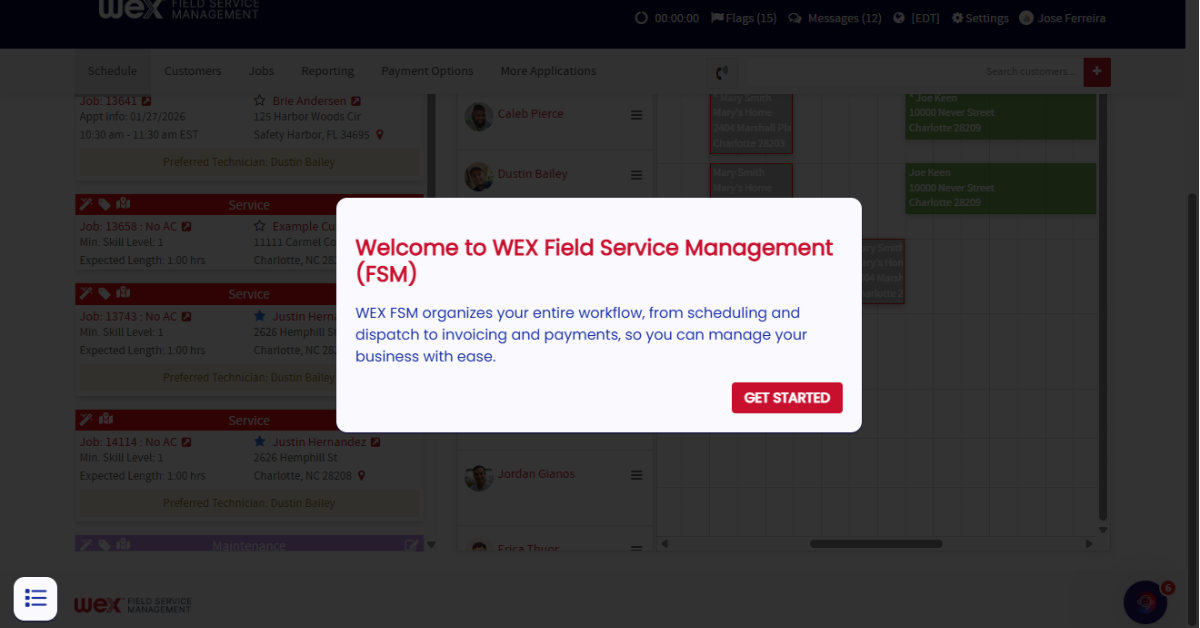
Managing plumbing accounting doesn’t have to consume hours of your week or require a degree in finance. WEX FSM’s plumbing business software automates the tedious parts of your financial management, so you focus on what matters the most – running and growing your business.
The platform handles invoicing automatically as soon as your plumbing technicians complete their jobs. No more handwritten invoices or delayed billing that hurts your cash flow.
Expense tracking integrates directly with your job management. Materials used on each project get recorded automatically, giving you accurate job costing without manual data entry. You’ll know exactly which jobs are profitable and which ones need pricing adjustments.
Actionable insights reports can be generated with a few clicks. It’s able to show you real-time snapshots of your business health rather than waiting weeks for a bookkeeper to compile spreadsheets. With seamless QuickBooks integration, your invoicing, payment, and expense data can sync effortlessly, reducing manual data entry and minimizing errors.
Getting your plumbing accounting right is one of the smartest investments you’ll make in your business. With the right platform and tools, financial management becomes something that supports your growth rather than holding you back. Whether you’re just starting a plumbing business or looking to grow an existing one, proper accounting for plumbing business operations is essential.
Plumbing Accounting FAQs
What’s the difference between plumbing accounting and bookkeeping?
Bookkeeping records daily transactions – invoices sent, bills paid, deposits made. It’s the tactical work of keeping financial records accurate and organized. Think of it as data entry and categorization.
While accounting analyzes that data to support business decisions. It includes financial statement preparation, tax planning, profitability analysis, and strategic planning. An accountant looks at your bookkeeping data and tells you which services make money, where costs are climbing, and how to structure your business for tax efficiency.
How do I know if my plumbing business qualifies for tax deductions?
Consult current IRS regulations and/or your tax advisor. What matters just as much as the deduction is your documentation. The IRS expects receipts, mileage logs, and a clear business purpose for each expense. A shoebox full of crumpled receipts won’t hold up well if you’re ever audited.
What are the common deductions plumbers may miss?
Here are some of the most frequently overlooked deductions:
- Work clothing and safety gear: boots, gloves, and protective equipment may be fully deductible
- Vehicle expenses: mileage, insurance, fuel, and maintenance for business use
- Tools and equipment under $2,500: can typically be deducted
- Continuing education and licensing fees
- Phone and internet costs: the business-use portion
- Home office deduction: if you have a dedicated space for administrative work
- Marketing and advertising expenses
- Professional services: including legal, bookkeeping, and accounting fees
The information in this blog post is for educational purposes only. It is not legal or tax advice. For legal or tax advice, you should consult your own counsel.
Copyright ©2026 WEX Inc. All rights reserved. The information in this document is subject to change without notice.