- August 21, 2026
- 8:51 am
- 8 min read
Included in this article
Struggling with equipment that is not delivered? Still not sure which equipment brand fits your HVAC operation best? You’re not alone. These are challenges most contractors deal with every day. Your supplier relationships shape everything in your HVAC business, from how fast you finish jobs to whether you actually make a profit.
When equipment shows up on time and parts are in stock, you can focus on what matters most: delivering great service. But when distributors drop the ball or manufacturers leave you hanging on warranty claims, every job gets harder than it needs to be. That’s exactly why a reliable partnership with your HVAC manufacturer matters more than ever.
In this guide, we’ll break down how to evaluate HVAC manufacturers and suppliers, who the major players are, and how to build supplier relationships that actually support your business.
Understanding HVAC Manufacturers and Suppliers
What are HVAC manufacturers? They design and produce heating, cooling, and ventilation equipment ranging from residential furnaces to commercial rooftop units. HVAC suppliers and distributors act as the critical link between these manufacturers and contractors, responsible for stocking equipment, parts, and components while providing technical support and logistics.
Choosing the wrong partners can create serious problems:
These issues chip away at customer satisfaction and become real barriers to growing your HVAC business.
Leading HVAC Equipment Manufacturers
The best HVAC manufacturers for your business depend on the customer segments you serve and the support infrastructure available in your region. Here’s what you need to know about the major players.
Premium Tier HVAC Manufacturers
Lennox, Trane, and American Standard are the common brands that homeowners recognize and trust. Lennox, Trane, and American Standard consistently rank in the S-tier for reliability, efficiency ratings, and warranty support.
✅ Pros for contractors
⚠️ Cons for contractors
Mid-Tier HVAC Manufacturers
This category represents the sweet spot for many HVAC contractors. Carrier and Bryant sit in the A-tier, while Rheem lands solidly in the B-tier alongside Ruud and Daikin.
✅ Pros for contractors
⚠️ Cons for contractors
Budget-Friendly Options
If you’re just starting your HVAC business, Goodman and Amana are friendly to contractors working with a limited startup budget. Their equipment is affordable, widely available, and relatively straightforward to service.
✅ Pros for contractors
⚠️ Cons for contractors
Specialty and Commercial HVAC Manufacturers
For contractors working with ductless mini-splits, VRF systems, or specialized commercial applications, manufacturers like Daikin, Mitsubishi Electric, and Bosch offer distinct advantages.
✅ Pros for contractors
⚠️ Cons for contractors
HVAC Parts Manufacturers and Component Suppliers
HVAC parts availability matters as much as equipment choice. According to a market report, the global HVAC aftermarket market is expected to reach US$145.7 billion by 2032, growing at a CAGR of 8.2% over that period. That growth means more choices for contractors — and it makes choosing the right parts manufacturer and supplier for your business even more important.
Types of HVAC Parts Suppliers
You’re dealing with two types of HVAC parts suppliers: OEM (original equipment manufacturer) parts distributors and aftermarket parts suppliers. OEM parts come directly from the equipment manufacturer or their authorized channels. They’re required for warranty work and generally offer better reliability. Aftermarket parts cost less, but quality varies significantly by supplier.
How to Choose HVAC Parts Manufacturers
Evaluate inventory capability. The best parts distributors always maintain deep inventory of fast-moving components. Compressors, circuit boards, motors, and capacitors should be available same-day or next-day.
Location matters immensely. Offline stores, including HVAC-specific wholesale distributors, account for approximately 71.3% of the global HVAC parts distribution market. This simply reflects the nature of demand. Contractors need hands-on product verification and same-day availability to minimize system downtime.
Evaluate parts pricing carefully. Don’t judge distributor pricing by individual part costs. Look at the total cost of doing business. Volume pricing tiers should be transparent and achievable based on your actual purchasing patterns, not aspirational numbers you’ll never hit.
How to Evaluate and Select HVAC Manufacturers and Suppliers
Know Your Customer Base First
Ask yourself questions like: What price points do your typical customers fall into? Are you primarily serving residential or commercial clients? Which brands do they already know and trust? Understanding your target customers is key to answering those questions and making better decisions on manufacturer and supplier partnerships. Before doing any desktop research, revisit your HVAC business plan to refresh your answers.
Test Before You Commit
Install a few systems and track warranty claims, customer satisfaction, and any installation challenges. Some equipment looks great on paper but creates problems in the field. It’s better to discover that on a handful of jobs than after you’ve invested in inventory and marketing around that brand.
Evaluate Distributors Just as Closely
Place a few orders and measure delivery times, accuracy, and how they handle problems. Do they immediately ship the correct replacement when they send the wrong part, or do you get stuck in a lengthy return process?
Don’t Overlook Training
Training availability matters tremendously. Manufacturers offering regular training on new product lines and troubleshooting help your technicians work faster and make fewer mistakes. This directly impacts your profitability through reduced callbacks and faster job completion times. Investing in continuing education for your HVAC technicians not only improves service quality but also helps with employee retention.
Managing Relationships for Long-Term Success
Build a Core Approved Vendor List
Creating a short list of preferred HVAC manufacturers and distributors brings consistency to your operations. A core vendor list typically includes 3–5 manufacturers spanning different price tiers and 2–3 reliable distributors with complementary strengths.
Negotiate Volume Pricing and Payment Terms
Once you’ve identified your preferred suppliers, formalize the relationship. Most HVAC distributors offer tiered pricing based on annual purchase volumes. Understanding these thresholds lets you plan purchases strategically to hit higher discount levels.
Avoid Single-Supplier Dependence for Critical Components
Recent HVAC industry trends have added extra volatility to the refrigerant transition. Contractors dependent on a single manufacturer or refrigerant type can easily find themselves unable to complete jobs, or are forced to pay dramatically inflated prices. Having qualified alternatives for critical components protects you when primary suppliers face shortages. This means maintaining relationships with multiple distributors and qualifying backup equipment manufacturers you can shift to during supply constraints.
Maintain Buffer Stock of Fast-Moving Parts
Smart inventory management means keeping buffer stock of fast-moving parts. Capacitors, contactors, thermostats, and common circuit boards are relatively inexpensive to stock but expensive to be without.
For example, if a $45 capacitor sitting on your shelf prevents a $500 rush shipping charge and two hours of lost technician time even once, that inventory pays for itself many times over.
Streamline Your HVAC Operations with the Right Tools
Managing relationships with multiple HVAC manufacturers, tracking parts inventory, and monitoring supplier pricing all add up to serious administrative overhead. When you’re managing these processes manually through spreadsheets and phone calls, something inevitably falls through the cracks.
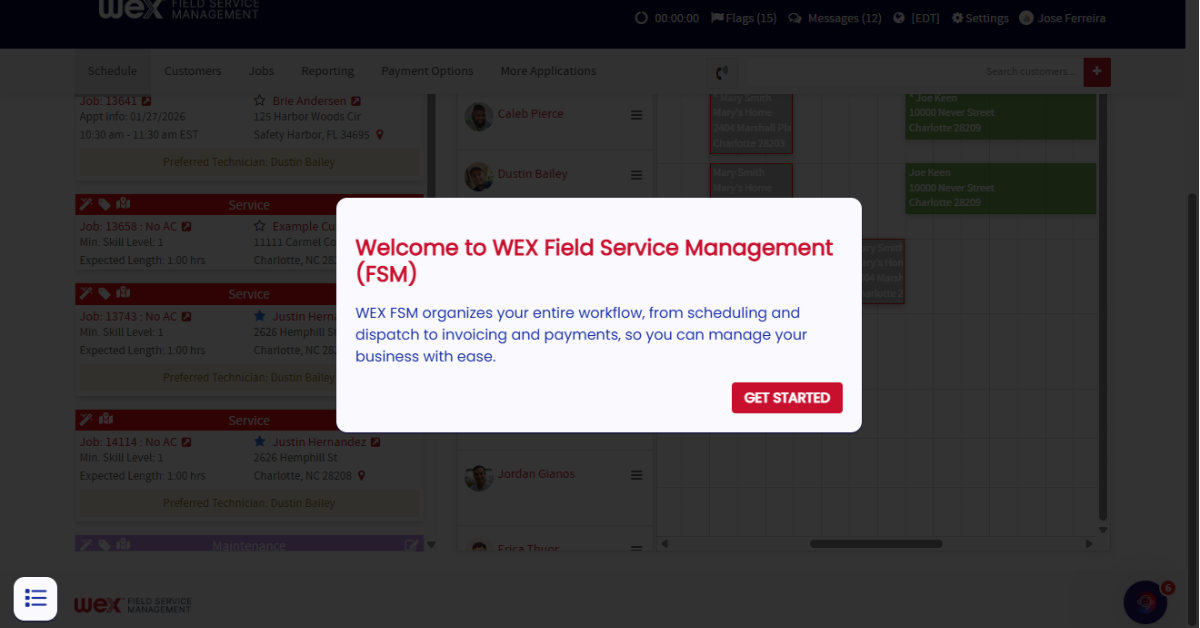
WEX FSM’s HVAC business management software gives you centralized visibility into your entire supply chain. It integrates supplier pricing so you can compare costs across vendors directly from the system. When you’re building estimates, you’re working with actual, current pricing from your distributors, which protects your margins and speeds up the quoting process. Combine that with smart HVAC pricing strategies, and you’re set up to maximize profitability on every job.
Better supplier management isn’t just about saving a few dollars per part. It’s about completing jobs faster, cutting down on emergency supply runs, improving cash flow, and delivering more consistent service to your customers. When your operations run smoothly behind the scenes, you have more time and energy to focus on what matters most to your business.
Ready to Start Your Own HVAC Business or Take Your Current One to the Next Level?
Learn how WEX FSM can support your growth with the right field service management tools — from scheduling and dispatching to invoicing and customer management.
Copyright ©2026 WEX Inc. All rights reserved. The information in this document is subject to change without notice.